
Access Points That Function Every Day
Sliding and Gate Installation in Plano for driveways, side yards, and enclosed outdoor areas requiring controlled entry
A gate that binds in its frame during summer humidity or requires two hands to operate defeats its purpose as a functional access point. Gios Fence & Gate installs residential sliding and swing gates throughout Plano with attention to clearance requirements, operating space, and how the gate integrates with your existing or planned fencing. The installation addresses practical concerns like whether vehicles can approach the gate at an angle, whether the gate swing interferes with landscaping or walkways, and how the latch mechanism holds up to daily use rather than occasional access.
Gate installation requires setting posts deeper and with larger footings than standard fence posts since they bear the weight of the gate plus the lateral force applied during opening and closing. Sliding gates need level track installation and sufficient run space—typically one and a half times the gate opening width—while swing gates require clearance on the opening side and hinges rated for the gate's weight and width. The decision between sliding and swing configurations depends on your available space, driveway grade, and whether you want the option to add automation later.
Schedule an estimate to evaluate your driveway approach and determine which gate configuration fits your property layout.
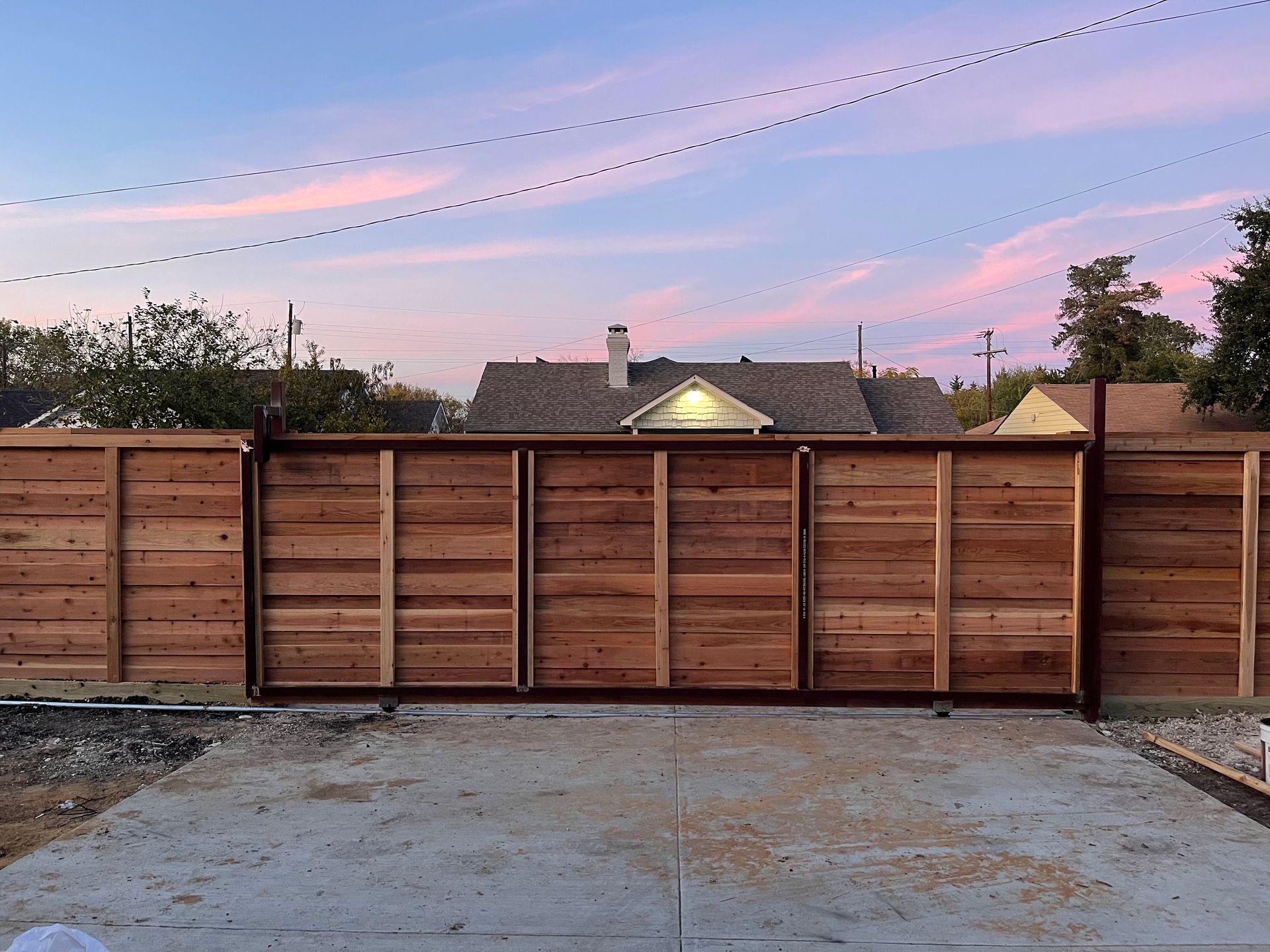
The process begins with confirming the opening width needed for your vehicles or equipment, selecting gate materials that match your fence, and determining post placement based on the gate's operating mechanism. Posts are set in concrete with cross-bracing during the cure period to prevent any shift that would throw the gate out of alignment. Hinges are through-bolted rather than surface-mounted when the gate exceeds a certain weight, and latch hardware is positioned so it engages reliably without requiring precise alignment every time you close the gate.
After installation, swing gates open smoothly without dragging on the ground or requiring lifting to clear the latch, and they remain where you position them rather than swinging closed or open on their own due to improper hanging. Sliding gates roll along their track without binding, and the wheels remain engaged even when the track accumulates leaves or minor debris. The latch mechanism operates with one hand, and the gate frame stays square rather than sagging at the latch-side corner over the first year.
Gate projects also include considerations like whether the design allows mail delivery without opening the gate, whether pedestrian access requires a separate walk gate, and whether decorative elements should match your home's architectural style rather than defaulting to basic utility hardware.
Answers to Frequent Service Questions
Gate installations raise specific questions about operation and site fit that affect the final design.
What determines whether a sliding or swing gate works better?
Sliding gates require run space along the fence line but don't need clearance in front of the opening, making them practical for driveways with limited turnaround space or gates on sloped approaches where a swinging gate would drag.
How is the gate frame built to prevent sagging?
The frame includes diagonal bracing that transfers weight from the latch side back to the hinge side, and the bottom rail is reinforced to resist the twisting force applied when the gate swings or rolls.
What hardware is standard for residential gate installations?
Hinges are sized for the gate's weight and width, latches include a catch that holds securely without rattling, and sliding gates receive bottom rollers or guide wheels that keep the gate tracking straight rather than swinging laterally.
How do North Texas temperature swings affect gate operation?
Wood gates expand in humidity and contract in dry heat, which is why latch alignment includes adjustment room, and metal gates are powder-coated to prevent rust in Plano's variable weather without requiring annual repainting.
When should gates be installed relative to the rest of the fence?
Gates are often installed after the fence line is complete so the opening width can be confirmed and posts are set with the fence as reference points, ensuring the gate aligns with the established fence height and style.
Gios Fence & Gate handles gate projects with the same owner-operated approach as full fence installations, ensuring every detail functions as intended. Reach out for an on-site evaluation and estimate based on your property's access requirements.